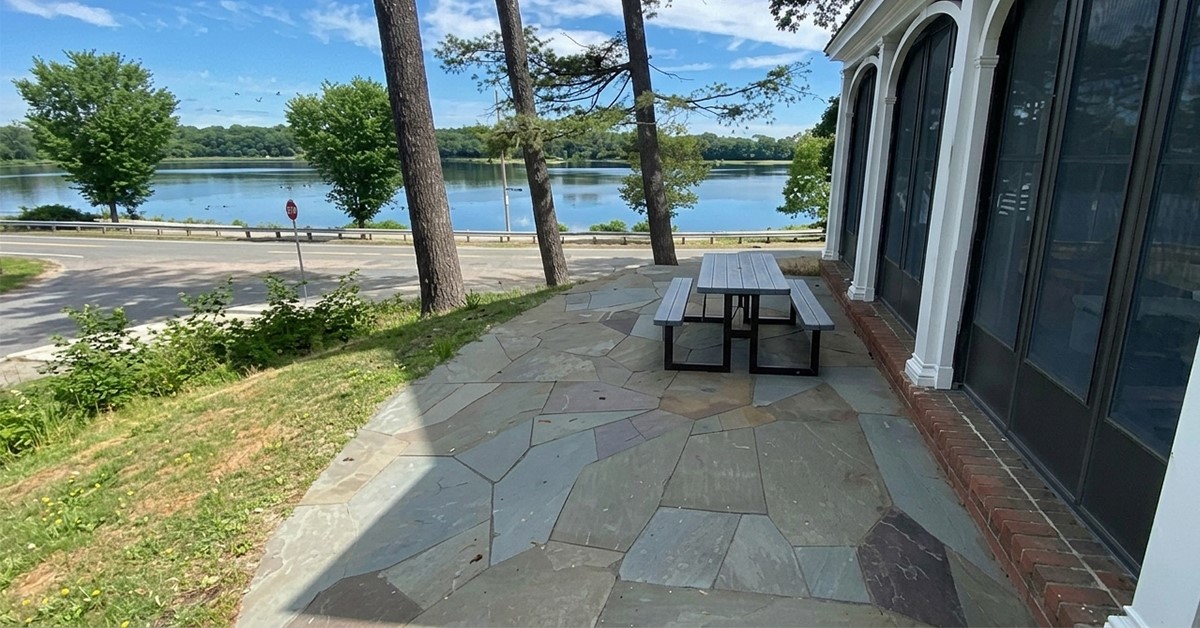
Your Yard Isn’t Standard, So Why Should Your Pathway Be?
Every Boston yard has different dimensions, grades, drainage patterns, and landscape features. This guide explains how to plan a pathway around those conditions instead of using a standard layout. You will learn how stone, planting, patios, walls, drainage, and everyday use can influence pathway design, especially when working with compact or established Boston properties.
Your yard has its own shape, slope, drainage, and landscape features. A pathway should reflect those conditions instead of following a standard layout. In Boston, compact lots, older homes, mature trees, stone walls, and uneven ground can make planning more involved.
Good pathways installation Boston starts with understanding these site conditions before deciding on the route or materials. The goal is to create a path that feels natural within the space, provides easy access, and works well with the surrounding landscape. Before making design choices, consider how the pathway will connect with your patio, garden, steps, and other outdoor areas.
Start With the Property
Every yard has its own limits and opportunities. Some Boston properties have slopes, narrow side areas, mature trees, or several landscape features close together.
Before planning a pathway, consider the house, patio, planting areas, walls, steps, and existing hardscape. Also look at how people currently move through the yard. A direct route may suit a patio connection, while a sloped property may need a different layout.
The pathway should follow the site’s conditions and make good use of available space rather than force a standard design.
Consider Daily Use
A pathway should support everyday activities as well as the overall landscape design.
Think about who will use it and where they need to go. It may connect the home with a patio, provide access to a garden, or create a clear route to an outdoor seating area. These needs can affect the pathway’s width, direction, and placement.
In compact Boston yards, efficient use of space is especially important. A well-planned path can improve movement while leaving room for planting, seating, and other outdoor features.
Work With Existing Landscape Features
A pathway should work with the landscape features already on the property. With pathways installation Boston, consider how the route will connect with patios, outdoor steps, natural stone walls, planting, and other hardscape.
A patio may provide a natural destination, while steps can guide the pathway between different levels. A stone wall can define an edge, and planting can soften the transition. This approach helps create a more connected landscape.
On established Boston properties, existing structures and mature landscaping should also influence the pathway’s placement and overall layout.
Choose Stone Based on the Setting
Natural stone can suit many outdoor pathways, but the right choice depends on more than appearance. Consider:
- Property style: Match the pathway with the home’s architecture and landscape.
- Existing features: Relate the stone to nearby patios, walls, and steps.
- Available space: Keep the design balanced in narrow or compact yards.
- Pathway use: Main access routes may need a different layout than garden paths.
- Landscape scale: Stone should complement planting, trees, and surrounding features.
Considering these factors together can help create a pathway that looks appropriate, supports regular use, and works well with the rest of the property.
Plan Around Drainage
Drainage should be part of pathway planning from the beginning.
Boston experiences rain, snow, and seasonal changes that can affect outdoor surfaces and surrounding soil. Water can collect in low areas or move toward patios, planting beds, and other parts of the property.
Before installing a pathway, consider the existing drainage pattern. Look at slopes, low areas, nearby structures, and the direction of runoff. A pathway should work with the property’s water flow rather than create new problems.
Make the Route Feel Natural
A pathway does not always need to follow the shortest route. A slight change in direction may help it work around a mature tree, planting bed, slope, or existing feature. However, the route should remain clear and easy to follow. Avoid unnecessary turns that make movement difficult, but do not force a straight line where it does not suit the landscape.
A structured route may work well near a formal entry, while a softer layout can suit garden areas. The home’s architecture and surrounding landscape should help guide the final design.
Give Planting Enough Space
Planting can help a pathway feel connected to the rest of the yard. Shrubs and perennials can frame the edges, while trees can provide shade and structure. However, plants should not reduce walking space or create ongoing maintenance issues.
Allow enough room for growth so the pathway remains clear over time. This is especially important in compact Boston yards, where planting can quickly affect a narrow route.
Earthen stoneworks provides planting services, including large tree planting and shrubs and perennials, which can work alongside other landscape features.
Small Yards Need Efficient Layouts
Limited space does not mean a pathway needs to look basic. It means every part of the layout should serve a purpose. A well-planned route can connect the house with a patio, link different levels with outdoor steps, or provide access through a planted area. The design should leave enough room for circulation without taking over the yard.
This balance is especially useful on smaller Boston properties. A carefully planned pathway can improve access while preserving valuable space for planting, seating, and other outdoor uses.
Think About the View From the House
A pathway can influence how your yard looks from inside the home, too. Windows and doors facing the landscape may offer views of the route throughout the year. Consider its shape, stone, surrounding planting, and connection with other features.
The pathway does not need to stand out as the main feature. Instead, it should complement the landscape and support a balanced view from both indoor and outdoor spaces.
Plan for Long-Term Use
A pathway should remain practical as the landscape develops. Plants grow, trees mature, and outdoor areas may change over time. Consider how easily the path can be accessed, cleaned, and maintained.
Leave suitable space around the route for future planting growth. Planning pathways, patios, walls, steps, planting, and drainage together can also help create a landscape that remains functional and easier to maintain.
Why a Custom Approach Matters
Boston properties rarely have identical conditions. A narrow urban yard, sloped lot, or property with existing stonework may require a different pathway layout. For stone pathway installation Boston, natural stone can connect the route with nearby landscape features when selected for the setting.
A custom approach helps ensure the pathway suits the property’s size, layout, existing features, and everyday use instead of following a standard design.
Build a Pathway That Fits the Property
Your yard has its own layout, grade, planting, and existing features, so your pathway should be planned around those conditions. Earthen stoneworks provides pathway services designed to create practical connections between different areas of Boston properties. From the initial layout to the finished stonework, the focus stays on how the pathway fits with patios, steps, walls, planting, drainage, and everyday use.
A thoughtfully planned pathway can improve access while adding structure to the landscape. If your yard needs a new route or an existing pathway needs a better layout, visit earthen stoneworks today to discuss your project and plan a pathway suited to your property.